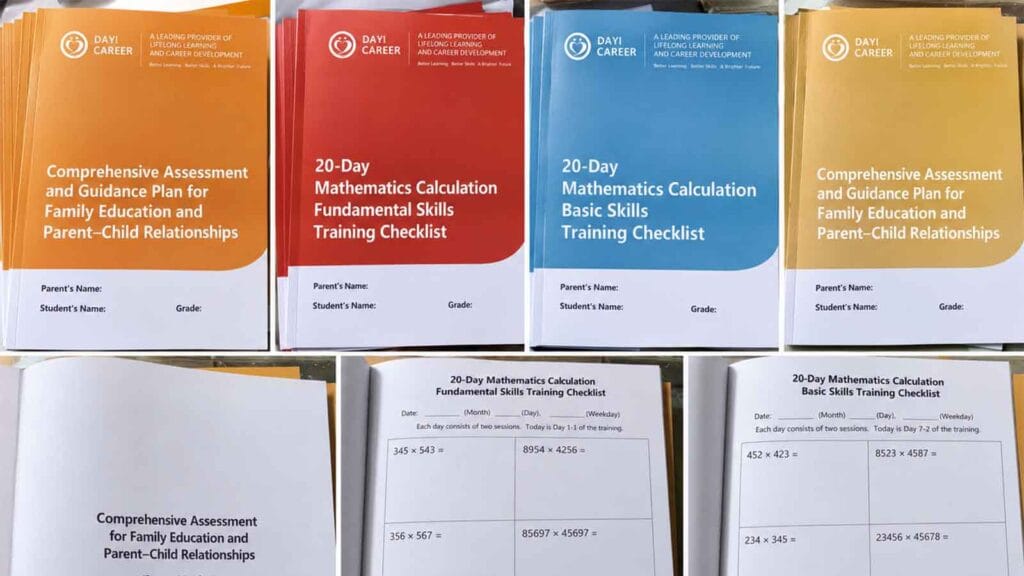
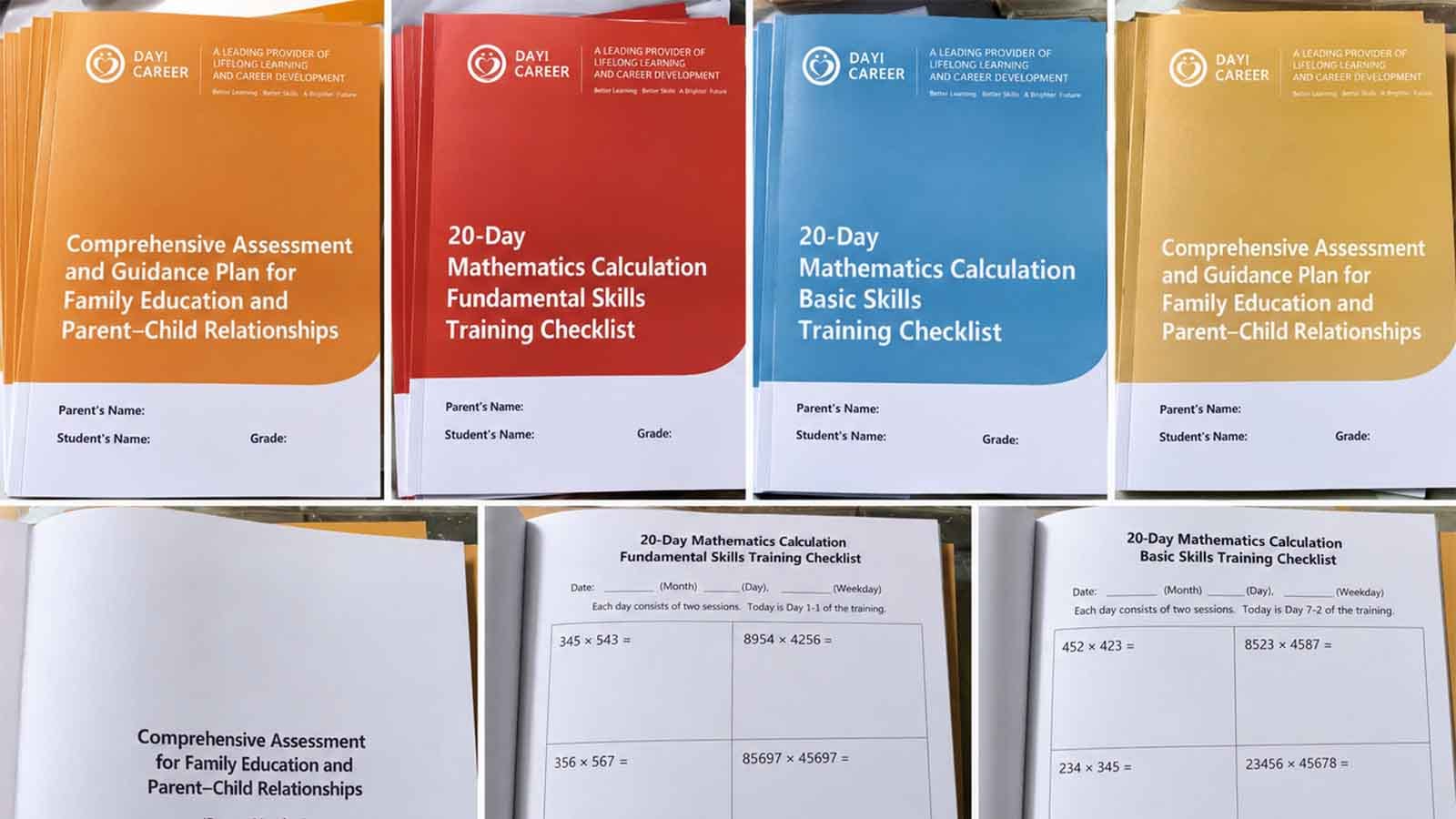
School exercise books look like one of the simplest products you can source: paper, a printed cover, and some kind of binding. In practice, buying school exercise books in bulk is one of the most specification-heavy, volume-sensitive and unforgiving categories in the stationery trade — because a wrong ruling, the wrong page count or a paper that bleeds through can make an entire shipment unusable.
For a school, the priorities are rarely about how attractive the cover is. They are about whether the ruling matches the curriculum, whether the pages, size and paper match the tender document, whether students can write on both sides, whether the binding survives a full term, whether the quantity arrives on time, and whether every reorder matches the previous batch — all of which make buying school exercise books in bulk far more than a simple print job.
For a stationery distributor or wholesaler, the questions are different again: which sizes and rulings are worth stocking, how many cover SKUs a range should have, what students actually like, how to test a new design without over-committing inventory, which packaging suits retail and warehouse picking, and at what volume the unit cost becomes sensible when ordering school exercise books in bulk.
This guide is written for schools, education institutions, stationery distributors, importers and buyers answering education tenders. It walks through the conditions that actually decide cost, quality and delivery before you contact a notebook manufacturer.
School Exercise Books in Bulk: Two Different Buying Projects
Many suppliers put every school notebook on one product page, but a school project and a distributor project follow different purchasing logic.
| Buyer type | What matters most | Common risk |
|---|---|---|
| School / School district | Consistent specification, delivery date, price, logo, teaching ruling | Whole batch unusable after a wrong specification |
| Education department / Tender | Tender document, paper, pages, packaging, files | One non-matching parameter can disqualify the bid |
| Stationery distributor | SKUs, cost, packaging, best-sellers, replenishment | Too many cover designs scatter inventory |
| Campus / College store | Student preference, ruling, paper, cover style | Stocking designs students do not buy |
| NGO / Aid project | Quantity, durability, transport, uniform specification | Logistics and distribution costs underestimated |
Public tenders make this difference visible. Some school-supply buyers purchase exercise notebooks by the full container and require FOB / CIF and export cartons; large education projects split single line, double line, graph book and drawing book into separate SKUs, each with its own size, page count, 60gsm or 75gsm paper, cover GSM, binding and quantity.
Large buyers rarely ask only “how much is one school notebook?”. They ask: “Can you manufacture exactly to this specification, at this volume, and deliver it on time?”
1. Size: Confirm the School’s Real Format, Not Just A4 / A5
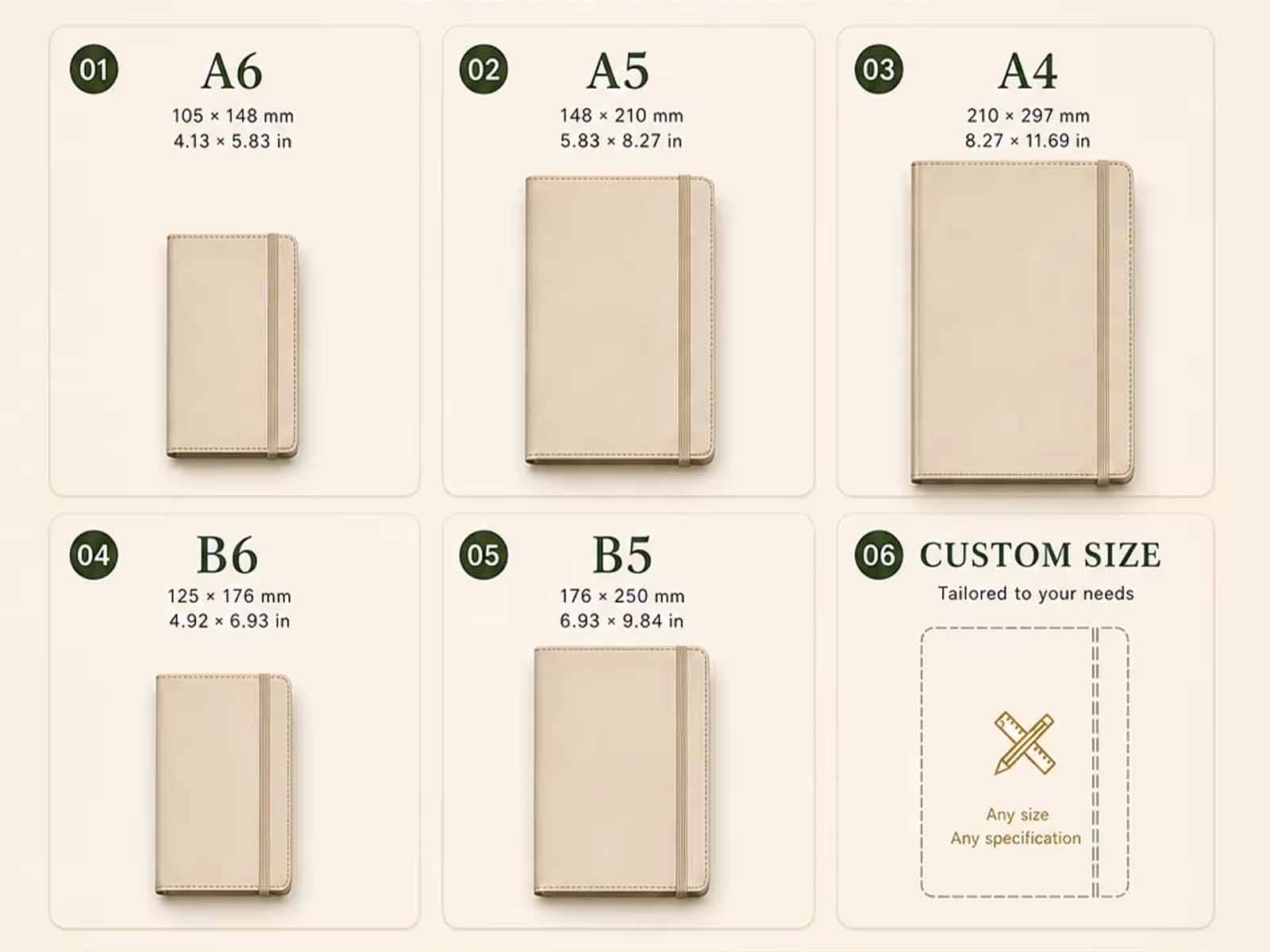
Common exercise book sizes include A4, A5, B5, 6 × 8 in, 8 × 10 in, 8.5 × 11 in, and custom school formats used by different national education systems. For a school tender, produce directly to the finished size in the document — write “A5 – 148 × 210 mm” rather than just “A5”, because schools often have existing book covers, folders, desk storage or carton sizes the notebook must fit. Paper sizes follow the ISO 216 system. For a distributor, research the best-selling formats in the target market first instead of launching every size at once — more SKUs are not automatically better.
2. Ruling: The Most Important Specification Is the Inner Page
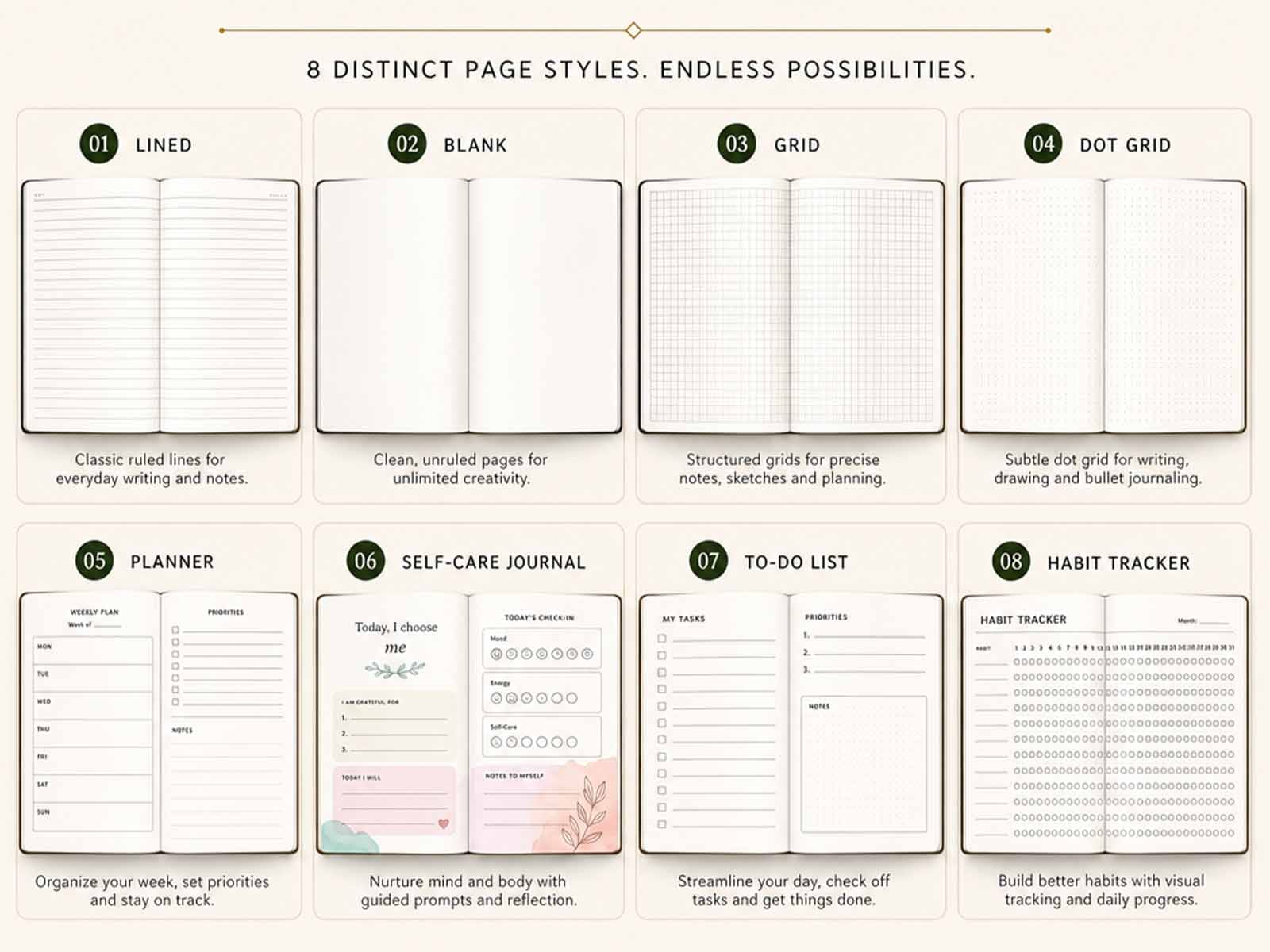
The core of an exercise book is its ruling, and different countries, ages and subjects use completely different pages. Common forms include single line, college ruled, wide ruled, double line, 4-line handwriting ruling, square / quadrille, graph, dot grid, blank, one page lined + one page blank, one page lined + one page squared, Seyes / French ruling, and custom curriculum ruling.
When buying, confirm the details that actually define the page: line spacing, margin position, line colour, margin colour, grid size, lines per page, and whether the ruling is printed on one side or both. University students usually want more content per page and prefer college ruled or a denser ruling; early primary students may need wider spacing or a handwriting guide. Maths, engineering and science often suit squared / graph pages, language subjects suit lined, and art suits blank.
3. Paper: GSM Is Not the Only Thing That Matters
Education projects are highly price-sensitive, so exercise book paper is not always as thick as a premium journal. What matters is the combination of GSM, opacity, whiteness / shade, smoothness, double-sided writing, pen type, and how easily the page shows through. Large public exercise book RFQs ask for both 60gsm and 75gsm options rather than just “good paper”, because the real requirement is that students can write on both sides within the target cost and the paper stays consistent all term. Paper weight is defined as grammage.
Is 80gsm always better than 60gsm? Not automatically. 80gsm is usually thicker, but a school project must also weigh single-book weight, carton weight, freight cost, year group, double-sided use and final retail price. A recent project in Mexico, for example, required 80gsm or above as a specific customer requirement — but that should not become a rule that every school notebook must be 80gsm.
4. Binding: Why the Cheapest Structure Often Needs the Largest Volume
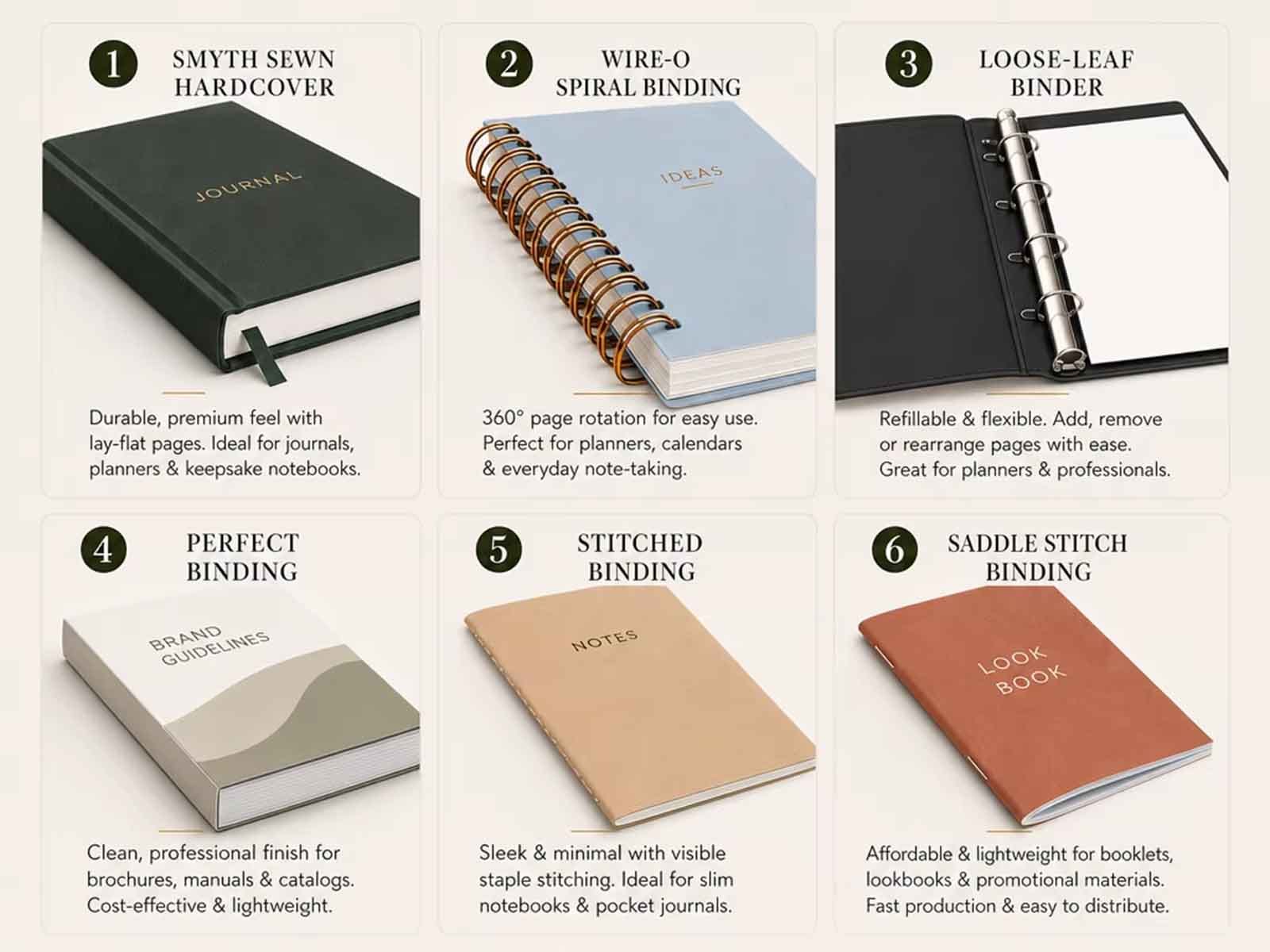
Common school binding includes saddle stitch / staple, sewn binding, perfect bound, spiral, Wire-O, and composition-book / casebound structures.
- Saddle stitch is the typical school exercise book structure. It is efficient and suits high-volume, standardised products — but precisely because it suits automation, small quantities cannot spread the machine setup and fixed costs. A simple structure does not always mean the smallest batch is cheapest.
- Sewn / perfect bound suits higher page counts or different durability requirements. See sewn-bound notebooks and perfect-bound notebooks.
- Spiral is common in universities, college stores and some retail markets; it adds punching and coil-insertion steps, so its cost structure differs from saddle stitch. See spiral notebooks.
For school exercise books in bulk, MOQ is best confirmed by product structure rather than a generic “school notebook MOQ”. In the exercise book range currently published by MM Notebooks, sewn / perfect-bound exercise books start at 2,000 pcs and saddle stitch starts at 10,000 pcs. For multiple cover SKUs or rulings, also confirm whether the MOQ is counted per design, per colour or per order.
5. Cover: Schools and Distributors Want Very Different Things
When a school buys directly, the cover is usually functional: school logo, subject name, a student name field, class, grade, a timetable, a multiplication table, school rules or educational graphics. A distributor buying school exercise books in bulk, by contrast, is building a retail product and has to think about which styles students will buy, what different age groups like, and whether to do campus, city, animal, sport or abstract designs — and how many covers a range should have.
One real project shows the distributor logic well: the client was not a university itself, but an independent boutique selling to students of a large Texas university. The buyer wanted college-ruled paper, more lines per page, an owl motif (and would also compare typewriter-style artwork that suits a college-student aesthetic), and — because the investor would not commit until all supplier samples arrived — the final stocked designs were chosen only after comparing samples. That is the real campus-retailer sequence: compare samples, check paper and appearance, choose SKUs, then decide inventory.
If the product will use a university name, crest, mascot or other protected brand assets, confirm trademark / licensing authorisation in advance.

6. Write the Specification as a Table, Not a Chat
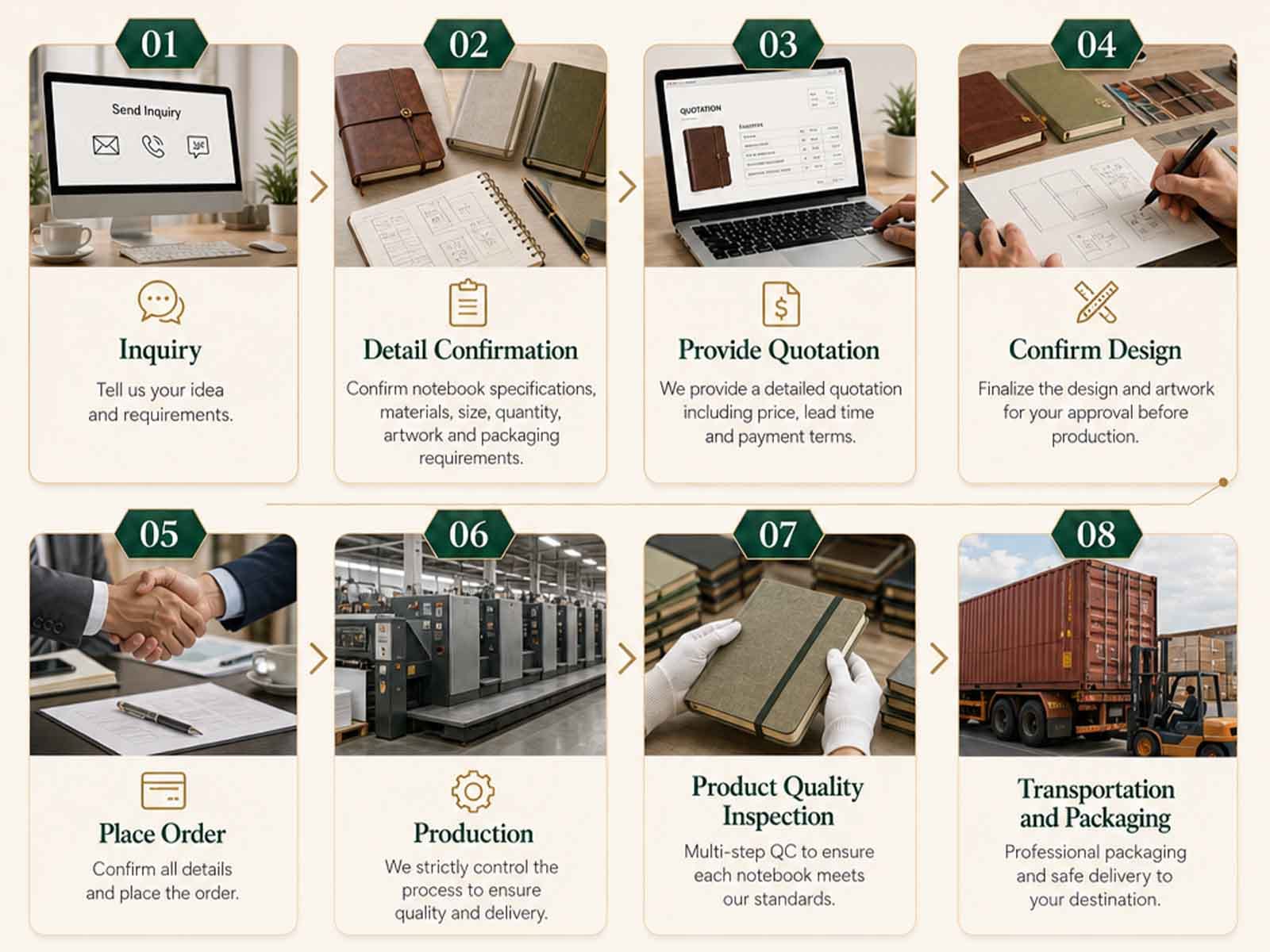
For a school project, turn the specification into a table. A clear table means the supplier quotes faster, several factories quote the same product, and production can use it directly as an approval reference.
| Item | Specification |
|---|---|
| Product | Student Exercise Book |
| Size | 6 × 8 in |
| Pages | 80 pages |
| Inner paper | 75gsm bond |
| Ruling | Single line |
| Line colour | Blue |
| Margin | Red |
| Cover | 130gsm gloss cover |
| Binding | Saddle stitch |
| Cover printing | 4C |
| Quantity | 100,000 pcs |
| Packing | 20 pcs / shrink pack, export carton |
| Destination | Georgetown |
| Incoterm | CIF |
A distributor should add the retail fields on top of this: SKU, cover design, barcode, case pack, master carton and retail label.
7. Why School Notebook Samples Are Not Cheap
Buyers often ask why a sample costs more than the bulk unit price when a finished notebook sells for a few cents. The bulk price is built on high-volume machine production, while a sample may still need separate artwork handling, a proof, short-run printing, individual cutting, hand binding, simulation of the bulk process, a special cover and international courier. For offset-printing projects, machine setup, plates, cleaning and preparation do not disappear just because only a few samples are made — so sample cost for school exercise books in bulk cannot be read as bulk unit price × 3. A school or tender sample mainly checks specification, paper, ruling, binding, cover and page count; a distributor sample also compares which cover sells, which size suits the shelf, the paper feel and the retail packaging.
8. Quality Control: The Real Risk Is a Systematic Error
Check the points below before accepting a large batch. The worst outcome is not one visible defect — it is discovering a systematic error after tens of thousands of books are already made.
- Paper: matches approved GSM, no obvious show-through, no serious paper flaws, no clear shade difference.
- Ruling: correct line spacing, correct margin position, no obvious double-sided mis-registration, consistent graph / quadrille.
- Printing: no missing ink, no large smudges, no wrong, duplicated or missing pages.
- Binding: correct staples, no abnormal page pull-out, firm sewn structure, no obvious glue overflow.
- Cover: no obvious wrinkling at glued areas, no serious appearance defects.
- Packing: pieces per pack, pieces per carton, carton mark, SKU, destination, gross / net weight.

9. The Distributor’s Most Common Mistake: Too Many Cover SKUs
Distributors often want to launch every style at once — owl, floral, sports, campus, retro, minimal. The problem is that MOQ multiplies the inventory fast: if each design needs 2,000 pcs, six covers become 12,000 pcs, and adding a second size can double that to 24,000 pcs. A first range is better built from fewer sizes, fewer rulings and a filtered set of cover differences, split into two groups:
- Core SKU: sells all year — simple cover, black / blue, single line / college ruled, mainstream size.
- Trend SKU: refreshed each back-to-school season — illustration, animal, campus, seasonal designs.
10. Back-to-School Projects Must Work Backwards from the Shelf Date
School products have hard deadlines. A recent Mexican project was a reminder: the client only began sourcing roughly 5,000 spiral notebooks close to the deadline, and the factory could only schedule production as quickly as possible. The safer method is to plan backwards:
Store / School delivery date ← International freight ← Packing ← Mass production ← Sample approval ← Artwork approval ← RFQ / supplier selection.
If the project ships by sea, do not wait until the month before term starts to confirm the design.
11. US Market: Check Trade Compliance for Lined Paper School Supplies
If the product is imported into the United States, this section cannot be skipped. The US still has an antidumping duty order on certain lined paper school supplies from China, and related products from India face antidumping and countervailing measures that continued after a five-year sunset review in 2023. Most importantly, do not decide on your own that a product is inside or outside the scope just from the words “lined / squared / blank” — the formal scope defines product structure, size, ruling and exclusions precisely. A US importer or distributor should, before a large order, confirm the HS classification, check the official AD / CVD scope, let a customs broker or trade-compliance professional decide, and include any possible duty in the landed cost. Do not change the ruling just to “avoid policy”; the product must first meet real teaching and selling needs, then be classified and imported lawfully.
12. Printed Content: Not Everything Can Be Printed Directly
If the inner pages and cover are supplied by the customer, review the content before sampling. Pay attention to copyright, trademark, school-logo authorisation, licensed characters, images, maps, sensitive or restricted content, and destination-market labelling requirements. Different production origins and destination markets have their own legal and printing requirements, so tell the manufacturer at the quotation / sample stage whether this is ordinary ruling or contains substantial teaching material, illustration, branding or protected content.
13. Packaging: School and Retail Are Not the Same
School distribution usually cares about easy counting, easy handling, carton strength, consistent pieces per carton, and class / grade marking. A distributor may also need shrink pack, barcode, SKU label, retail-ready pack, case pack, pallet and warehouse label. Recent public school-stationery RFQs buy by the 20-foot container and specify corrugated cartons with FOB / CIF. So when ordering school exercise books in bulk, a distributor should not ask only for the notebook unit price — also ask: how many pieces per carton, carton dimensions, gross weight, CBM for 10,000 pcs, and whether different SKUs can be carton-marked separately.
14. What to Send for a School Exercise Books in Bulk Quote
| RFQ information | Example |
|---|---|
| Buyer type | School / Distributor / Tender |
| Quantity | 5,000 / 10,000 / container |
| Quantity per SKU | 2,000 pcs per cover |
| Size | A4 / A5 / 6 × 8 in |
| Pages | 80 pages |
| Paper | 70gsm white woodfree |
| Ruling | College ruled / 5mm square |
| Margin | Red margin |
| Printing | Blue lines / 1C |
| Binding | Saddle stitch / sewn / spiral |
| Cover | 200gsm art card |
| Cover printing | 4C |
| Lamination | Matte / glossy / none |
| School logo | Yes / No |
| Packaging | Shrink pack + export carton |
| Barcode | Yes / No |
| Destination | Country + port |
| Incoterm | FOB / CIF / DDP |
| Required date | Warehouse delivery date |
| Sample required | Yes |
For a tender, sending the tender document directly is usually fastest. For a distributor, add one more line: which specifications can share materials and production setup to reduce cost?
A School Tender RFQ Example
Subject: RFQ – Custom School Exercise Books

Buyer Type: School / Education Tender

Item 1:
Product: Single Line Exercise Book
Finished Size: 6 × 8 inches
Pages: 80 pages
Inner Paper: 75gsm white bond paper
Ruling: Blue single lines with red margin
Cover: 130gsm gloss printed cover
Binding: Saddle stitch
Quantity: 100,000 pcs

Item 2:
Product: Graph Exercise Book
Finished Size: 8.5 × 11 inches
Pages: 80 pages
Inner Paper: 75gsm
Ruling: 5mm graph, blue ink
Binding: Saddle stitch or perfect bound
Quantity: 50,000 pcs

Packing:
Please advise shrink-pack quantity, pcs/carton,
carton dimensions, gross weight and total CBM.

Destination:
[Port / Country]

Please quote:
1. FOB unit price
2. CIF price if available
3. MOQ per SKU
4. Sample cost
5. Sample lead time
6. Production lead time
7. Carton specification
8. Payment terms
A Stationery Distributor RFQ Example
Subject: RFQ – Wholesale School / College Notebooks

We are developing a notebook range for retail distribution.

Initial quantity:
10,000 pcs total

Target SKUs:
5 cover designs × 2,000 pcs

Size:
A5 / B5 – please quote both options

Pages:
160 pages / 80 sheets

Paper:
Please quote 70gsm and 80gsm options

Ruling:
College ruled

Binding:
Spiral

Cover:
Full-color printed cover, durable finish

Packaging:
Individual retail pack or shrink pack

Barcode:
Required

Destination:
[City / Country]

Please advise:
1. MOQ per cover design
2. Best way to share paper/binding setup across SKUs
3. Sample cost
4. Price at 10,000 / 20,000 / 50,000 pcs
5. FOB and CIF options
6. Production lead time before back-to-school season
FAQ
What is the MOQ for custom school exercise books?
There is no single MOQ for every structure. In the exercise book range currently published by MM Notebooks, sewn / perfect-bound exercise books start at 2,000 pcs and saddle stitch starts at 10,000 pcs.
What paper GSM is best for school exercise books?
It depends on the market, the target cost and how the book is used. Confirm GSM together with opacity, double-sided writing performance and the target retail price.
What ruling should a school notebook use?
It depends on age, subject and local teaching habits. Single line, college ruled, double line, handwriting guide, quadrille, graph, blank and French / Seyes ruling all serve different purposes.
Can a school put its logo or mascot on notebooks?
Production can be customised, but the buyer must hold the authorisation to use the relevant school logo, mascot, trademark or licensed artwork.
Should a distributor order many cover designs in the first order?
Usually not. Adding unlimited SKUs too early multiplies inventory; consider MOQ, stock, shelf space and replenishment speed together.
Why are exercise book samples expensive compared with the bulk unit price?
Because a small sample run cannot spread fixed costs such as plates, machine setup, artwork, printing and hand binding.
Can school exercise books from China be imported into the United States?
Yes, but certain lined paper school supplies from China may be subject to a current US antidumping duty order. Importers should confirm the formal scope, HS classification and specific product structure for trade compliance.
What should a school tender send to the manufacturer?
Send the complete tender specification, including size, page count, paper GSM, ruling, margin, cover, binding, quantity, packing, destination, Incoterm, sample requirement and deadline.
Getting School Exercise Books in Bulk Right
Ordering school exercise books in bulk is a high-volume, price-sensitive business, so saving a little per book becomes a real difference across a few hundred thousand copies. But the same logic cuts both ways: one wrong specification is also multiplied across hundreds of thousands of copies.
The useful comparison is not “which supplier is a few cents cheaper per book”, but who is quoting the same specification, who can produce that volume reliably, who can keep the second batch identical to the first, and who can deliver before the back-to-school or tender deadline. For schools, specification and delivery come first; for distributors, add SKUs, student preference, inventory and replenishment. Once those questions are settled, the unit price discussion becomes much simpler. Contact us with your specification to get started.