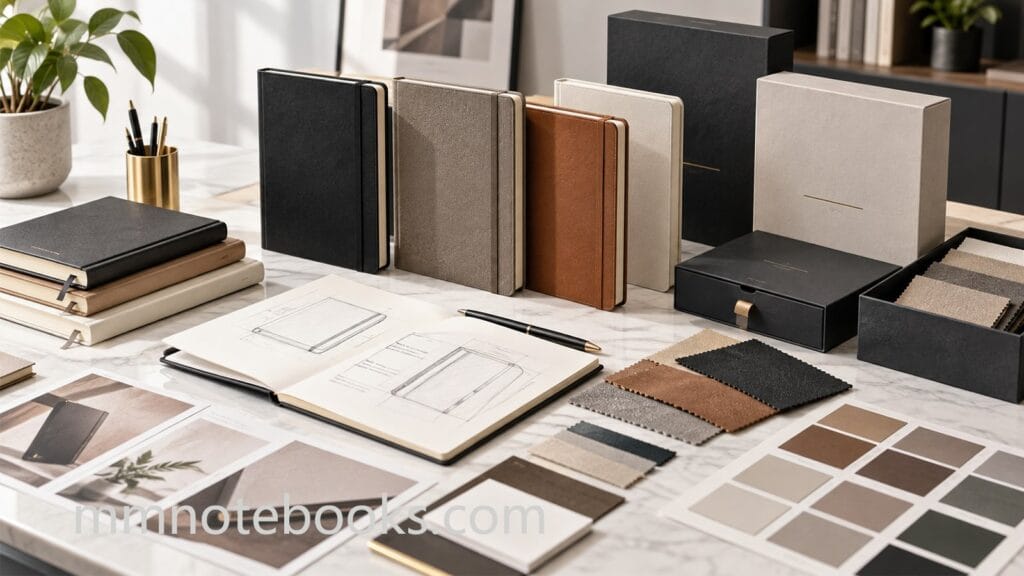
Building your own notebook brand is not simply about choosing a cover colour or printing a logo on an existing notebook. Private label notebooks are products that carry your positioning, your design language, your target customer and your sales strategy. The notebook itself can look simple, but turning an idea into a product that can be manufactured consistently involves decisions about materials, paper, binding, structure, printing, packaging, price and production quantity.
This is why the first step is to define the kind of notebook business you want to build. A stationery shop that wants a higher-value house brand has different needs from a creator developing a limited-edition fantasy journal, and both are different from an online seller preparing a practical planner for a mass market. The product should be designed around the market, not the other way around.
This guide walks you through the complete process of creating private label notebooks, from positioning and specification through sampling, MOQ and production to launch.
1. What Are Private Label Notebooks?
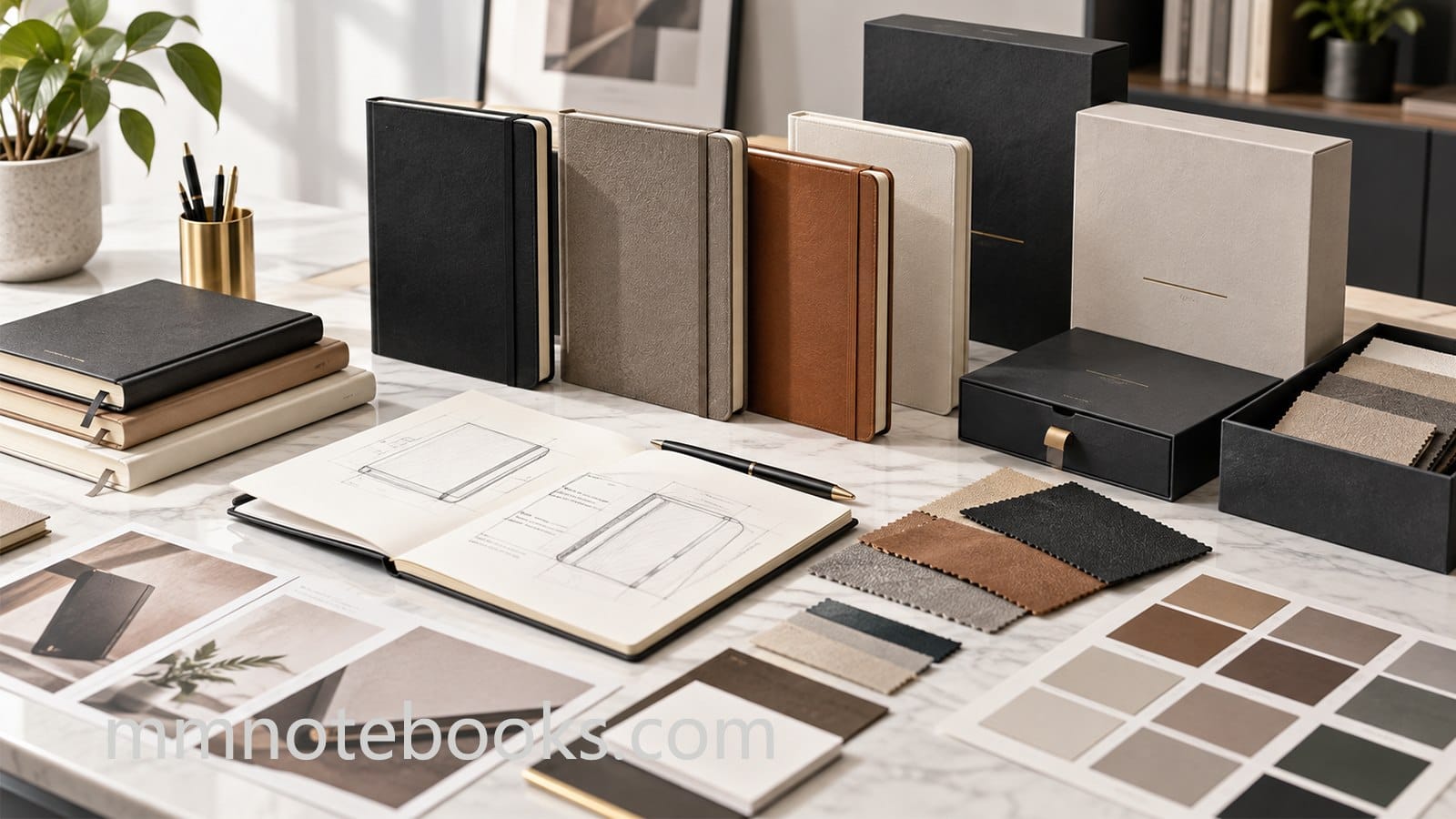
The term “custom notebook” can describe many different levels of customisation. At the simplest level, a buyer selects an existing notebook model and adds a company logo. This is common for promotional products, corporate gifts, events, conferences and internal company use. The basic notebook structure already exists, so the project mainly focuses on branding and decoration.
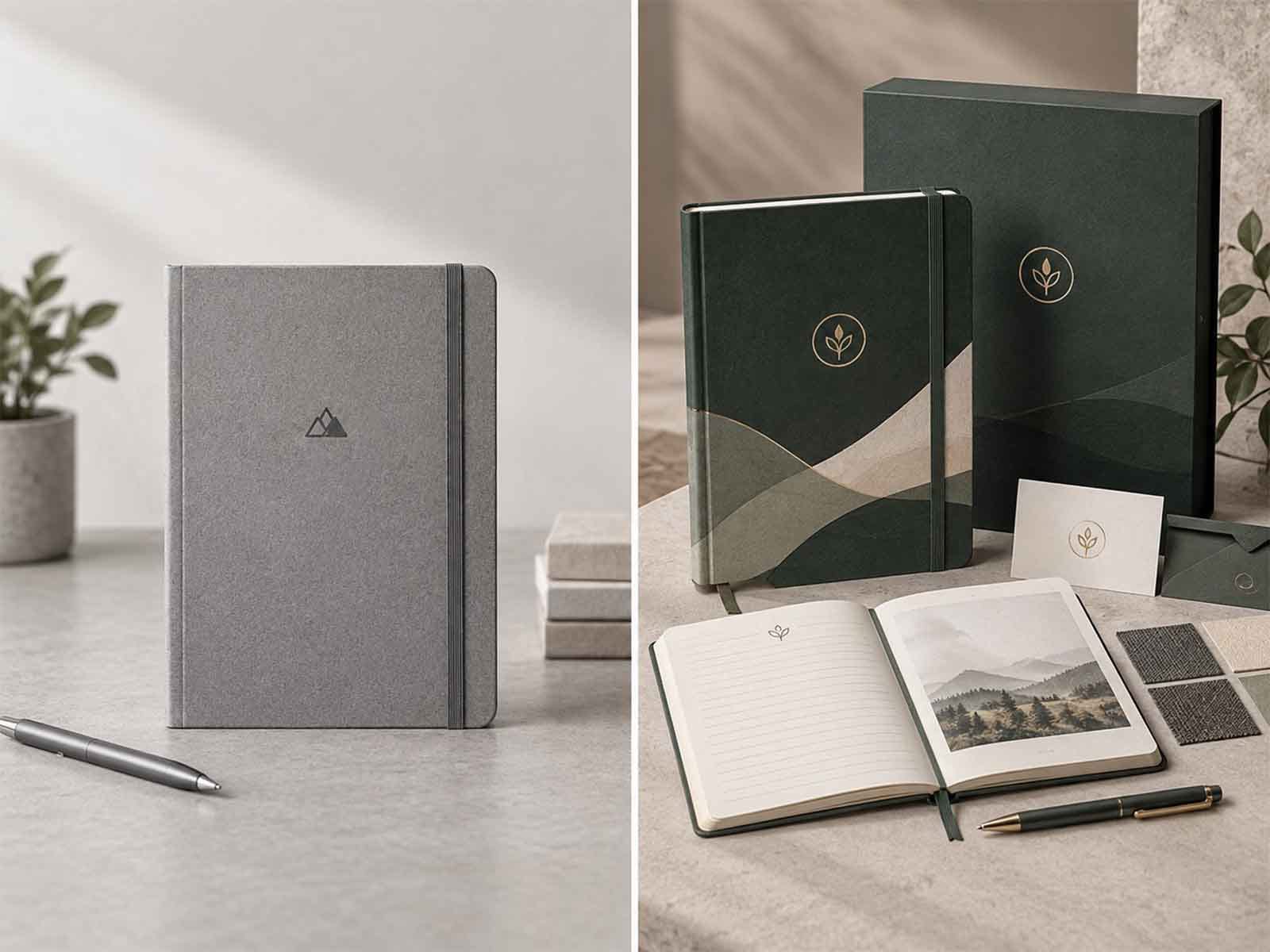
Private label notebooks usually go further. The buyer is building a product that will be sold or presented under their own brand. The project may involve a unique cover, custom colours, specific paper, original inner-page layouts, special binding, accessories, branded packaging, and a consistent visual identity across a product series. In retail terms this is the essence of a private label strategy: the product belongs to the brand owner, not to a generic catalogue.
The important difference is not only how many parts are customised. It is the purpose of the product. A simple custom notebook says, “This notebook has my logo.” A private label notebook says, “This notebook belongs to my brand and was designed for my customer.”
For this reason, private label development should begin with product positioning. The manufacturer can advise on materials, production methods, cost and technical feasibility, but the brand owner still needs to understand who the product is for and why someone should choose it.
2. Who Should Create Private Label Notebooks?
Stationery Retailers
A stationery retailer already understands local customers, price levels, popular sizes and common notebook uses. That market knowledge can become an advantage when developing an own-brand product. Instead of competing only with other stores selling the same standard notebooks, the retailer can create a differentiated line with its own logo, packaging, materials or product positioning.
One customer we worked with in India operated a stationery store. He purchased relatively simple standard notebooks and also developed a somewhat more premium notebook carrying his own logo. This gave him a combination of ordinary products for everyday sales and a branded option that could be presented differently from common stock items. The lesson is not that every retailer needs an expensive product; it is that an own-brand line gives a retailer more control over how the product is positioned and presented.

E-commerce Sellers and Marketplace Brands
Private label development gives the seller more room to create a reason to buy. A travel journal can include destination-planning pages. A reading journal can include review and rating sections. A productivity notebook can combine weekly planning, goal tracking and note pages. A premium gift journal can use a different cover structure and packaging. In these cases, the inner-page design and user experience can be more important than the logo itself.
Creative Brands, Designers, and Limited-Edition Products
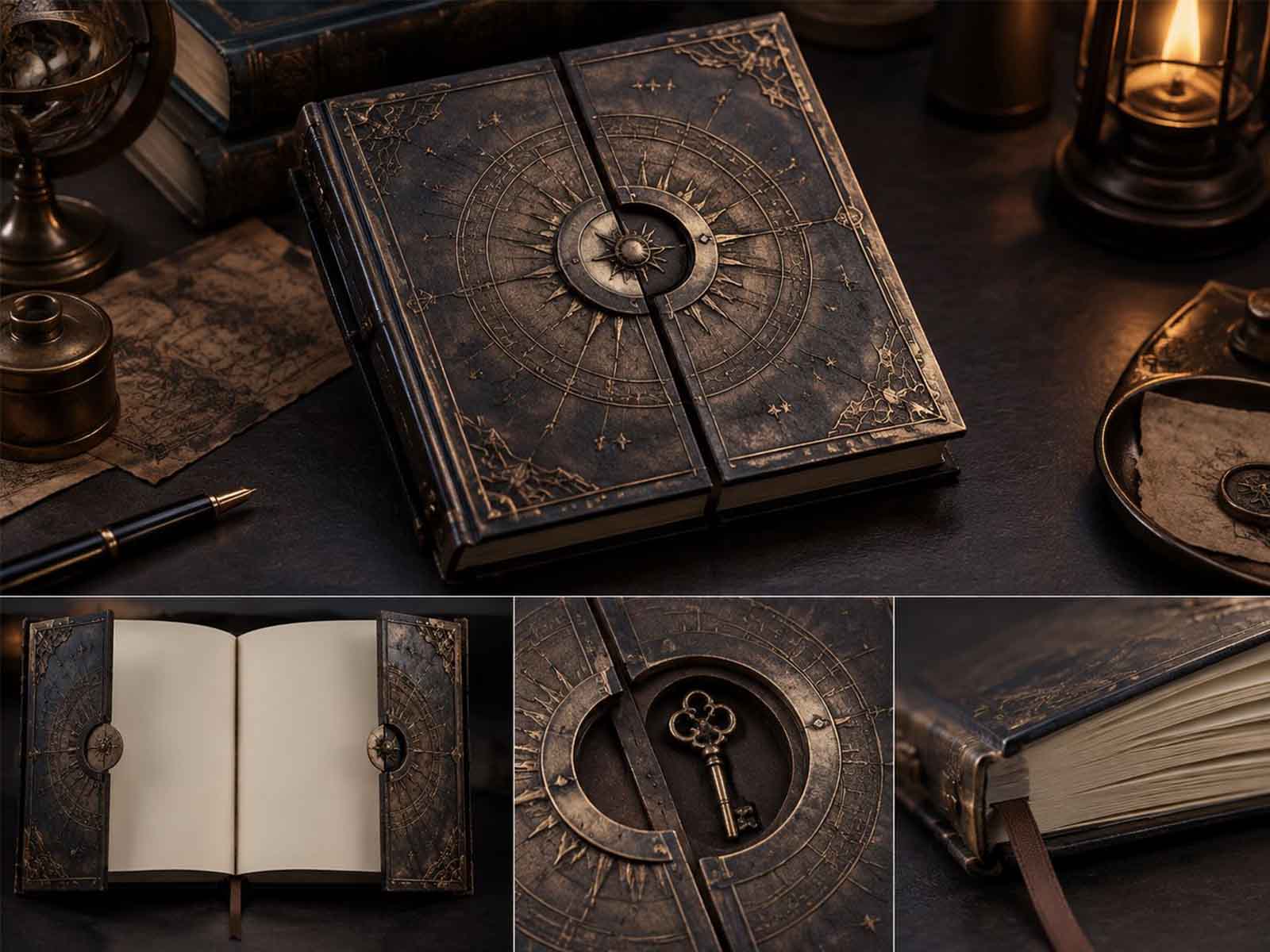
Some projects start with a creative concept rather than a conventional specification. The customer may imagine a book that looks like a historical artifact, a fantasy object, a collectible, or a piece of art. These projects can be especially suitable for brands that rely on visual storytelling and social media, but they also require more development work because unusual structures must still be manufacturable.
For example, one customer wanted a notebook with the feeling of an old magical book. The concept used an aged metal-style cover, opened from the middle, had a thick structure, and included a hidden key. The idea was designed to attract attention through the object itself, not simply through printed branding. A sample was developed first, and after the concept attracted purchase interest, the customer moved forward with a larger production order.
This type of product shows why manufacturer involvement matters. A designer can define the visual idea, but the factory must determine how the parts are assembled, which materials can create the desired appearance, how thick the product can be, how accessories are fixed, and whether the same result can be repeated during mass production.

3. Start With the Market, Not the Notebook
Ask practical questions before choosing a single material. Is the notebook a low-cost everyday product or a premium item? Will it be sold in a physical stationery store, on Amazon, through your own website, or as part of a gift set? Is it for students, office workers, readers, travellers, planners, artists or collectors? What price level does the final market accept? How much of your budget can be used not only for production but also for packaging, content, advertising, samples and inventory?
Your answers determine the product direction. A mass-market notebook usually needs efficient construction, stable quality and a cost structure suitable for larger quantities. A premium brand may spend more on paper, cover materials, finishing, packaging and details. A limited-edition product can justify an unusual structure, but its development cost and production complexity may be higher.
In other words, do not add expensive materials simply because they look premium. Every material, accessory and finishing process should support the target customer and the selling proposition.
4. Define the Product Before You Ask for a Final Quote
Once the market position is clear, convert the idea into a manufacturable specification. The exact details do not need to be perfect on the first day, but the more clearly the product is defined, the more meaningful the quotation and sample process will be.
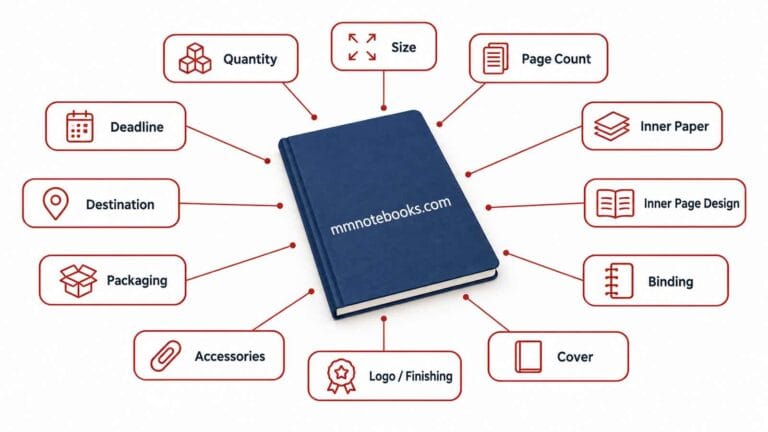
The main product decisions include size, page count, paper, inner-page layout, binding, cover material, logo or finishing method, accessories, packaging and target quantity. These variables are connected. Changing page count can affect spine thickness; changing the binding can affect how flat the notebook opens; changing the cover construction can affect which logo processes are available; and adding gift packaging can affect shipping volume and total landed cost.
Cover and Product Appearance
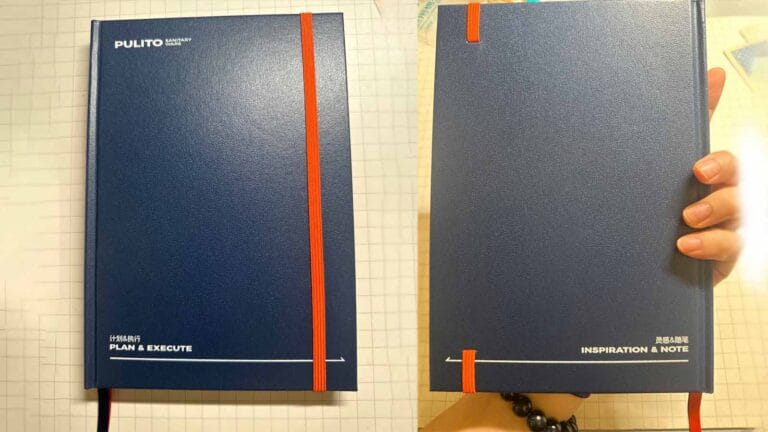
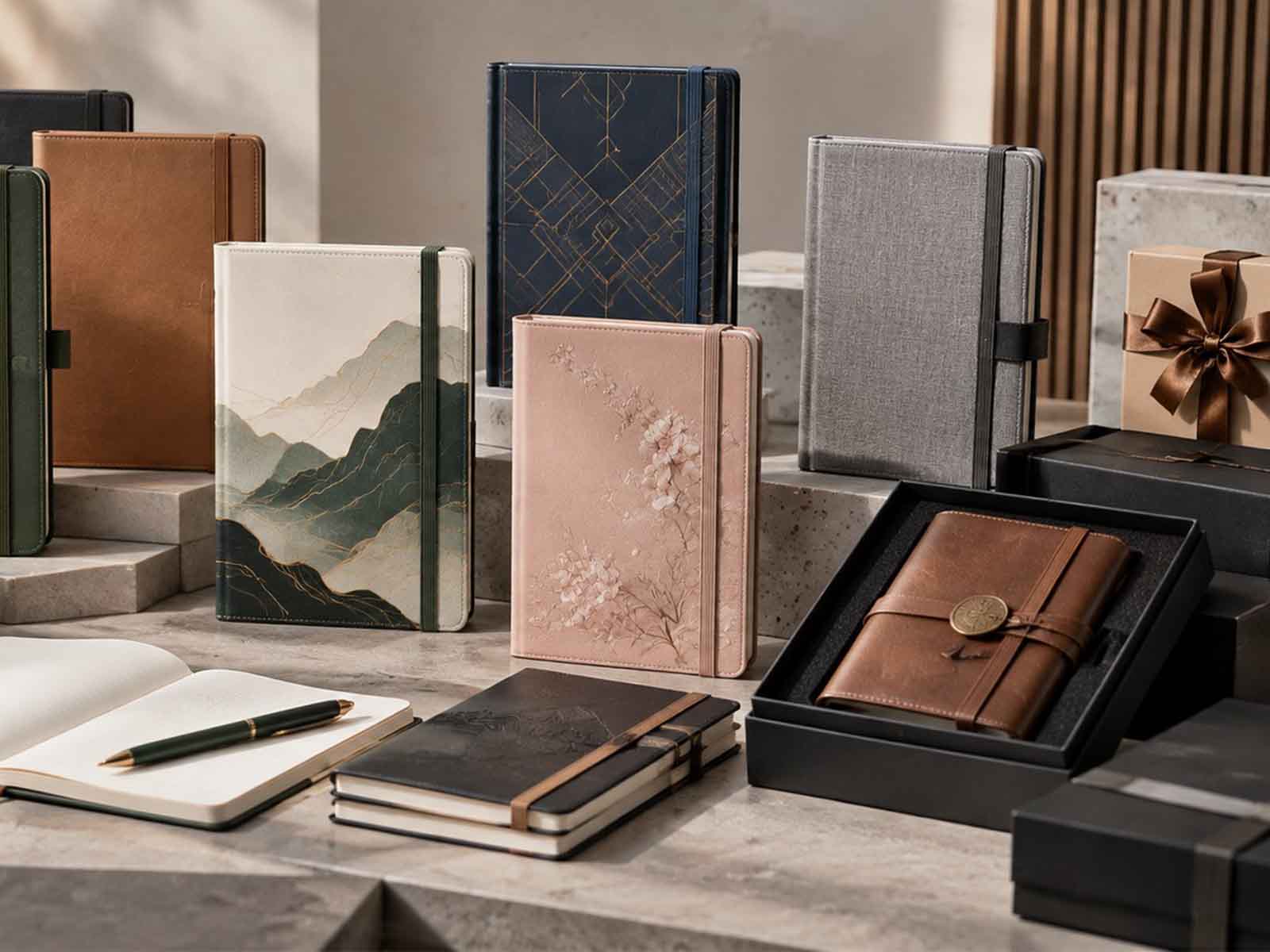
The cover establishes the first visual impression. Common directions include printed paper covers, PP covers, PU or leather-style covers, fabric covers, and more unusual decorative materials. A printed paper cover gives broad freedom for graphics and colour. PU can create a cleaner business or gift appearance and works well with processes such as debossing or foil stamping. Fabric offers visible texture. Special materials may be useful for creative products but usually need more testing.
Paper and Inner Pages
The inside of the notebook can be a stronger differentiator than the cover. Private label notebooks can use lined, dotted, grid, blank, planner, fitness, reading, study, schedule or completely custom pages. A brand can supply a PDF layout for monochrome or colour printing when a unique content structure is required. Paper is specified by its grammage (GSM), which directly affects thickness, weight and writing feel.
Binding and Usability
Binding changes both appearance and daily use. Spiral notebooks are convenient when users need flexible page turning or 360-degree folding. Sewn structures, such as hardcover notebooks, are often selected when durability and a more book-like construction are important. Perfect binding gives a clean spine, while saddle stitching suits thinner booklets. For a full comparison, see our guide to notebook binding types. There is no universally “best” binding — the right choice depends on page count, thickness, opening behaviour, target price and how the end customer will use it.
5. A Brand Is More Than a Logo
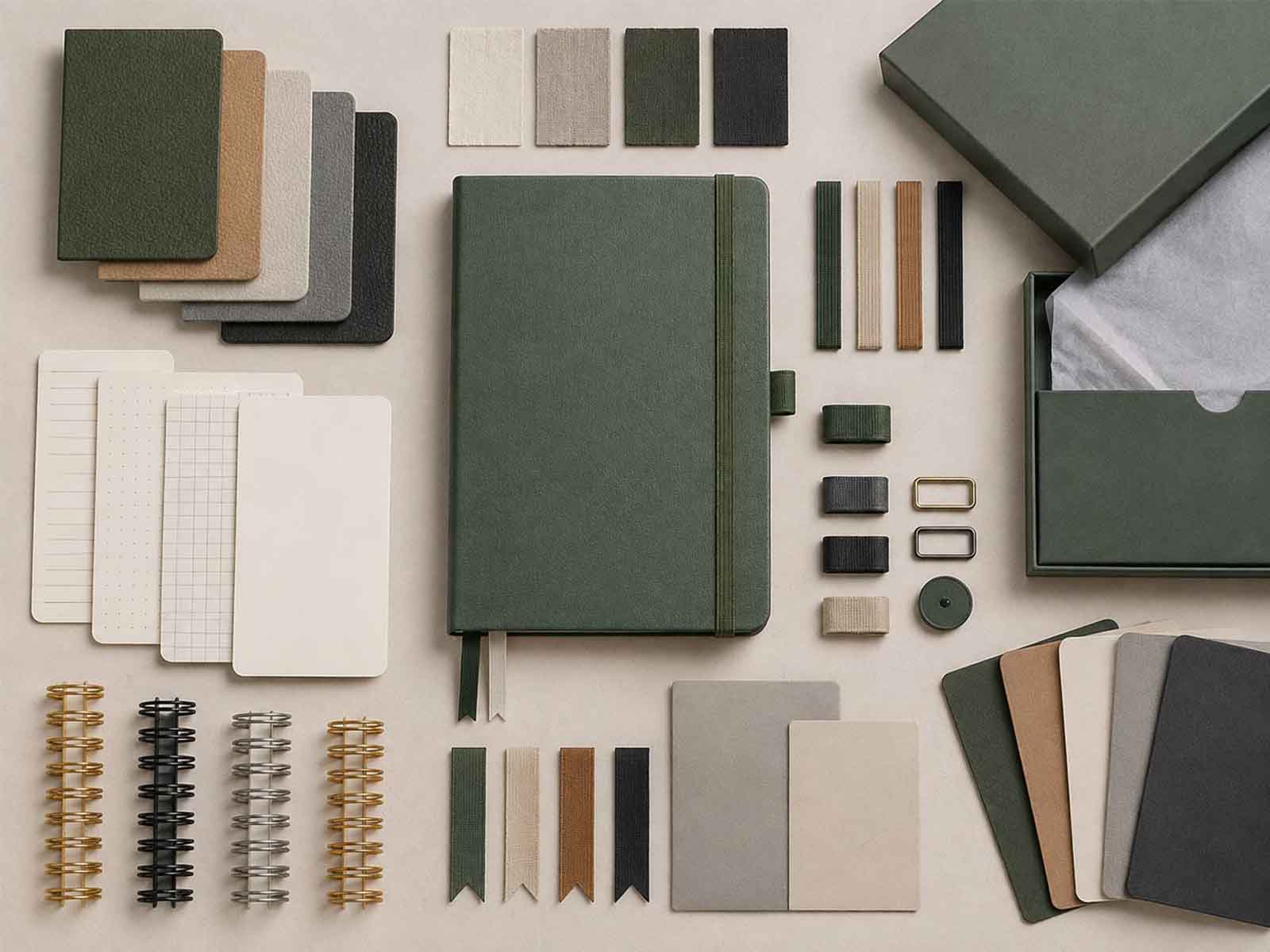
Brand coherence can come from a repeated colour system, recognisable cover details, distinctive inner-page layouts, consistent typography, packaging, or a clear product idea. A brand does not need to use every possible finishing process. In fact, too many decorative features can make the product more expensive without making it more useful or recognisable.
A better question is: what is the one detail that the customer will remember? For one brand it may be a very specific cover texture. For another it may be a useful page system. For a gift product it may be the unboxing experience. For a creative notebook it may be an unusual structure. Brand value comes from deliberate choices, not from adding every available accessory.
6. Work With the Manufacturer During Product Development
Early technical discussion can prevent expensive redesign later. If a cover includes metal pieces, the factory needs to consider weight, fixing methods, sharp edges, packaging protection and assembly consistency. If a planner has many different inner-page sections, the page sequence and printing setup must be checked carefully. If a cover uses several finishing processes in the same small area, the production team may suggest changing spacing or process order to reduce defects.
This does not mean the factory should replace the designer. The goal is to preserve the creative idea while making it realistic to manufacture. The earlier this conversation happens, the easier it is to balance appearance, cost and production stability.
7. Sampling Is Where the Idea Becomes a Real Product
The first sample should be treated as a development tool, not merely as a miniature mass-production order. Check dimensions, page count, materials, colour, logo position, finishing, page sequence, binding, accessories, packaging and actual usability. If the notebook needs to open flat, test it on a desk. If the product is designed for a particular pen type, write on the paper. If it contains pockets, tabs, ribbons or elastic bands, use them repeatedly rather than only looking at them.
Creative products may need more than one sampling round. That is normal when a new structure or unusual combination of materials is being developed. The objective is to establish a sample that both sides can use as the reference for mass production.

8. Plan MOQ and Production Around Your Business Model
Private label production must make commercial sense for both the buyer and the factory. Different notebook structures require different setup work, materials, printing methods and production lines, so minimum order quantity is not identical for every product. The MOQ for private label notebooks therefore depends on the cover, binding, finishing and packaging you choose, not on a single fixed number.
If your ideal structure requires a quantity above your current plan, ask whether another construction can achieve a similar user experience with a more suitable production setup. Product development is often a process of balancing the original idea with cost and quantity realities.
9. Prepare for Mass Production, Quality Control, and Packaging
Quality control should not be understood as only a final inspection at the end. Good control begins with the approved specification and sample, continues through material and production checks, and ends with inspection before shipment. The purpose is to identify deviations as early as possible and keep production consistent with the agreed standard.
Packaging should also be decided before production is finished. An OPP bag or shrink film may be enough for simple distribution, while a retail or gift product may need a folding box, top-and-bottom box, sleeve or other branded packaging. Packaging affects presentation, protection, carton size and shipping cost, so it is part of the product rather than an afterthought.
10. Common Mistakes When Building a Notebook Brand
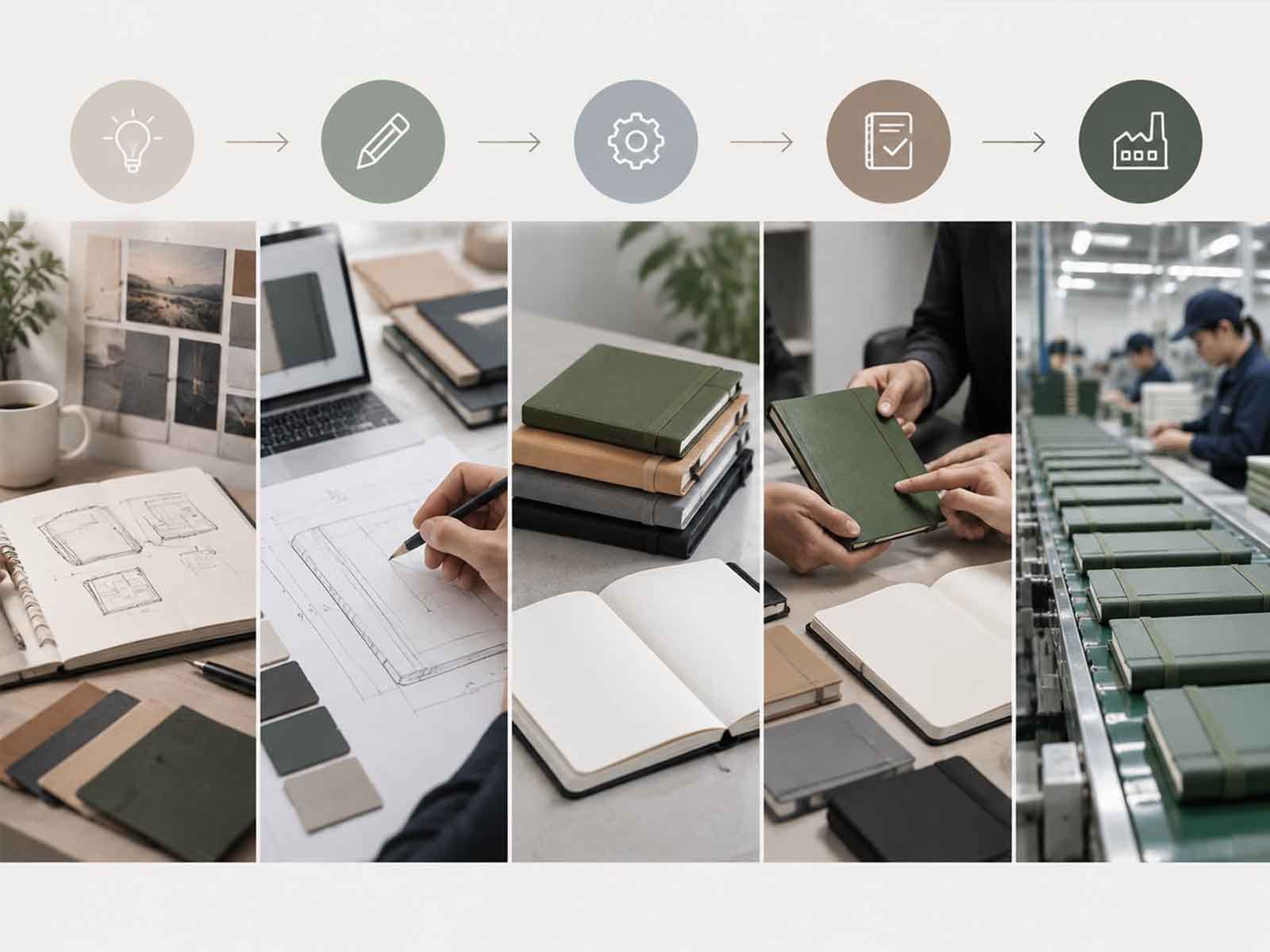
- Mistake 1: Designing for yourself instead of the customer. A founder may personally love a complex design, expensive material or unusual size, but the target customer may prefer something more practical. Use your concept as the starting point, but test whether it fits the market, price level and real use case.
- Mistake 2: Believing a logo automatically creates a brand. A logo identifies the owner of the product. It does not automatically create differentiation. Product function, visual consistency, packaging, content and user experience are what make the brand recognisable over time.
- Mistake 3: Ignoring manufacturing feasibility until the end. A design can look perfect in a rendering but become difficult, fragile or unnecessarily expensive in production. Discuss special structures, materials and finishing with the manufacturer while the design is still flexible.
- Mistake 4: Ordering before approving a physical sample. Screen colours, material photographs and digital layouts are useful, but they cannot replace a physical sample for a product that customers will hold and write in. A sample is where many small problems can be corrected before they become large production problems.
- Mistake 5: Adding features that do not support the product. Ribbons, elastic bands, metal corners, pockets, tabs, stickers, foil, embossing and special packaging can all be useful, but adding them simply because they are available can raise cost without improving the customer experience. Every feature should have a reason.
11. A Practical Private Label Notebooks Development Workflow
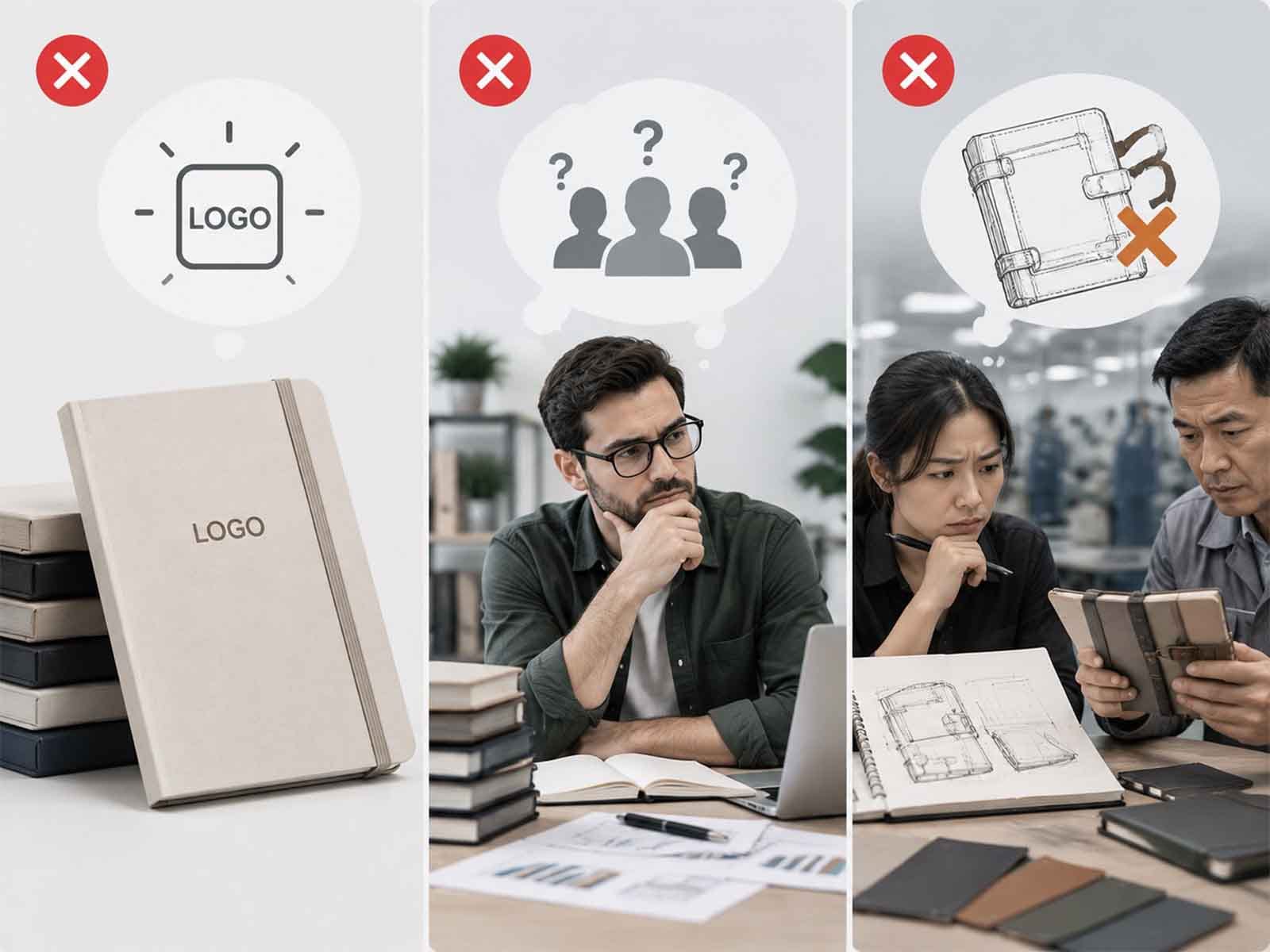
- Define the customer and sales channel: decide who will use the notebook, where it will be sold, and the approximate retail or project price range.
- Define the product concept: choose the role of the notebook — practical, premium, creative, educational, gift, planner, collectible or another clearly defined purpose.
- Build the basic specification: set the approximate size, page count, paper, inner-page type, binding, cover direction, accessories, packaging and quantity.
- Discuss feasibility with the manufacturer: review materials, structure, finishing, expected cost, MOQ and any technical risks before finalising the design.
- Prepare artwork and prototype: create the cover, inner pages, packaging files and any structural drawings required for sample development.
- Review and revise the sample: test appearance, paper, binding, dimensions, page sequence, accessories, packaging and real-world usability.
- Approve the production reference: confirm the final specification and the sample that will serve as the reference for mass production.
- Begin mass production and quality control: produce according to the approved specification, inspect key stages, and complete final quality checks before shipment.
- Launch, collect feedback, and improve the next order: the first production run is also a source of market information. Use customer feedback to improve later versions, new sizes, colours or related products.
12. Final Thoughts: Build the Product Before You Build the Catalog
Creating a private label notebook brand is not a single manufacturing transaction. It is a product-development process. A strong project connects market positioning, design, materials, manufacturing, sampling, quality control, packaging and sales strategy.
You do not need to know every printing or binding term before you start. What matters is being clear about the customer, the product idea, the intended quantity and the result you want to achieve. From there, the design and manufacturing details can be developed step by step.
The best private label notebooks are not the ones with the most features. They are the ones in which the design, function, cost and brand position work together — and can be produced consistently at the quantity your business needs.
FAQ
What is a private label notebook?
A private label notebook is a notebook manufactured for a buyer who sells or presents it under their own brand. Unlike a simple logo-on-existing-model product, private label notebooks are usually developed around the brand owner’s own cover, inner pages, packaging and positioning.
What is the difference between a private label notebook and a notebook with just a logo?
A logo-added notebook starts from an existing model and mainly changes the branding on the cover. A private label notebook goes further: the buyer builds a product with its own cover design, colours, paper, inner-page layout, binding, accessories and packaging, designed for a specific customer rather than taken from a generic catalogue.
Can the manufacturer help me design my own notebook brand?
Yes. The manufacturer can advise on materials, structure, finishing, cost and technical feasibility, and can help turn your concept into a manufacturable specification. The brand positioning and target customer still need to come from you, but the factory supports the design and production side throughout development.
Do I need a large minimum order to start a private label notebook brand?
MOQ depends on the notebook structure, cover, binding, finishing and packaging you choose, so there is no single number that applies to every product. Share your concept and target quantity with the manufacturer, and ask whether an alternative construction can reach a similar result with a more suitable production setup.
Can I get a sample before mass production?
Yes. Sampling is a standard part of private label development. The first sample is used to check dimensions, materials, colour, logo position, finishing, page sequence, binding, accessories and usability before production is approved.
What should I prepare before requesting a quote?
Define who the customer is, where the product will be sold, the intended use, the approximate quantity and the price range. Then outline the size, page count, paper, inner-page layout, binding, cover, finishing, accessories and packaging. The more clearly the product is defined, the more meaningful the quotation will be.
Which binding should I choose for my notebook?
It depends on page count, thickness, opening behaviour, target price and end use. Spiral or Wire-O turns freely and folds 360 degrees; sewn and hardcover structures suit durability and a book-like feel; perfect binding gives a clean spine; saddle stitching suits thinner booklets. Discuss the options with the manufacturer while the design is still flexible.
What packaging options are available?
Options range from simple OPP bags or shrink film to branded folding boxes, top-and-bottom boxes and sleeves. Packaging affects presentation, protection, carton size and shipping cost, so it should be decided as part of the product specification rather than after production.
Creating private label notebooks does not require you to become a printing or binding expert. It requires a clear product definition, an honest conversation with the manufacturer, and a sample process that turns your idea into something real. If you already have a specification, send the size, page count, paper, binding, cover, logo, packaging and quantity for a quote. If you only have a concept, send reference images, estimated quantity, intended use and target market first, and define the specification step by step.